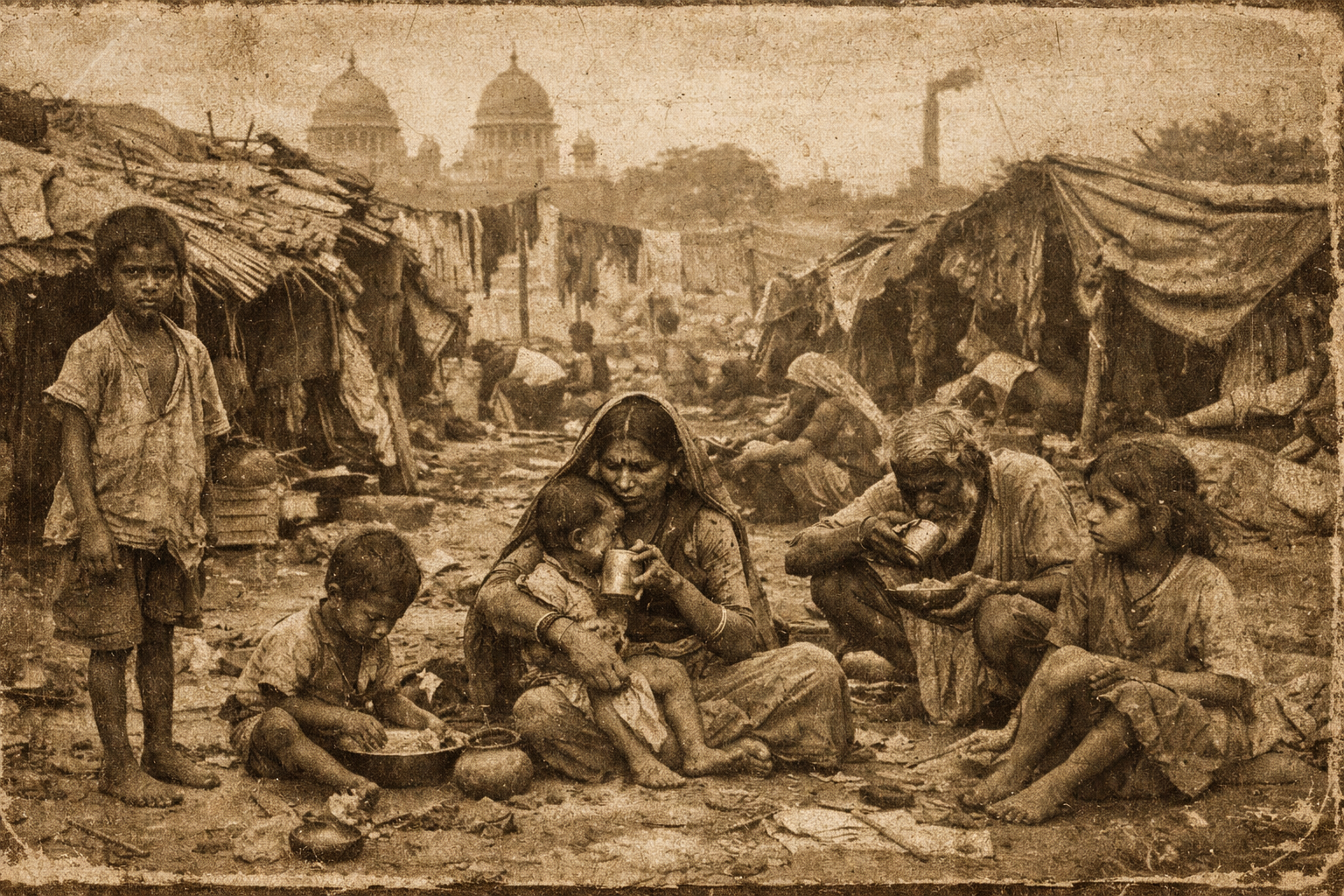
Literacy in India: Deep-Rooted Problem
Have you ever thought about how difficult life would become if you couldn’t read or write? Not being able to read a bus number, not being able to fill out a form at a hospital, not being able to help your children with their homework—these seemingly small things become a daily torment for millions of people. India, home to one of the world’s oldest civilizations, has still not completely freed itself from the shackles of literacy. This is not merely a problem of statistics—it is the life story of hundreds of millions of people.
Thank you for reading this post, don't forget to subscribe!What is literacy? A simple Introduction
Literacy does not simply mean that a person cannot recognize letters. Its scope is much broader. A person who cannot read or write is called illiterate. But in today’s world, “functional illiteracy” is also widely discussed—referring to people who can read a little but cannot apply it meaningfully in their everyday lives.
Think about it: for a farmer who cannot read the instructions on a seed packet, technology is completely useless! Literacy is a darkness that makes a person a stranger in their own life.
Current State of Illiteracy in India
According to the 2011 census, India’s literacy rate was approximately 74.07%. This means nearly 26% of the population—more than 300 million people—were still illiterate. Although the 2021 census has not been fully completed, it is estimated that this figure has improved slightly. Nevertheless, 300 million illiterate people—a number greater than the total population of many European countries combined—is deeply alarming.
Literacy Rate Gaps State-wise
Literacy rates vary tremendously from one Indian state to another. The literacy rate in Kerala is more than 96%, but in Bihar it is only 63.82%. Rajasthan, Uttar Pradesh, Jharkhand, and Chhattisgarh also show a worrying picture. This disparity revealed that access to education in India is far from equal—it is as though several entirely different worlds exist within one nation.

Difference Between Rural and Urban Areas
The gap in literacy between cities and villages is nothing short of a chasm. Urban literacy rates are around 84-85%, while rural literacy rates are around 67-68%. The situation of women living in villages is even more distressing. When there is no culture of learning within the home itself, generations of children sink into the same darkness. It is a vicious cycle that does not break on its own.
Main Cause of Illiteracy
Illiteracy did not arrive overnight. Behind it lie centuries-old systems, social structures, and economic inequalities. Let us understand them one by one.
Poverty and Economic Inequality
Poverty and illiteracy walk hand in hand. When a family struggles to put food on the table, buying books feels like a luxury. In poor households, children are sent to work rather than school—in fields, brick kilns, or as domestic helpers. These children become laborers in their childhood, and education remains nothing more than a distant dream for them.
Discrimination in Girls’ Education
“What’s the point of educating a girl too much—she has to get married anyway”—this mindset still runs deep in many parts of India. Fear for their safety, rigid social customs, and skewed economic priorities are among the reasons for not sending girls to school. How can the literacy rate ever rise when half the population is denied education?
Schools and Infrastructure Problems
In many remote areas, there are no schools at all. And where they do exist, there is no proper roof, no toilets, no electricity. Children have to walk several kilometers just to reach school. In such conditions, parents grow fearful and end up keeping their children at home.
Shortage of Teachers and Quality Issues
Government data reveals that millions of teaching posts across India lie vacant. The teachers who are present often have to manage multiple grades simultaneously. Lack of training, absence of motivation, and zero accountability together hollow out the quality of education. A good teacher can illuminate a hundred generations—but what happens when the teacher is simply absent?
Consequences of Illiteracy
Illiteracy is not merely a personal problem—it gnaws at the entire nation and society like a termite eating through wood.
Economic Development Effects
The earning capacity of an illiterate person is very much limited. They cannot secure better employment, cannot advance in entrepreneurship, and cannot harness technology. When hundreds of millions of people find themselves in this situation, the impact on the country’s GDP is direct and devastating. It is estimated that illiteracy costs India billions of rupees every single year.
Lack of Health Awareness
An illiterate mother cannot correctly administer the medicine written on a doctor’s prescription for her child. She cannot read information about vaccination schedules. Basic knowledge about nutrition, hygiene, and family planning simply does not reach her. The result? High infant mortality rates, widespread malnutrition, and an enormous burden of preventable disease.
Political Exploitation and Social Inequality
An illiterate person does not know their own rights. They cannot identify the false promises of politicians. Their vote can easily be bought. They can be misled in the name of caste, religion, and emotional issues. Illiteracy weakens the very roots of democracy and prepares fertile ground for exploitation and oppression.
Government Efforts and Schemes
Governments have taken several steps to combat illiteracy. Some have been successful; others have remained confined to paper.
Sarva Shiksha Abhiyan and Mid-Day Meal
Launched in 2001, the Sarva Shiksha Abhiyan (SSA) was an ambitious program that aimed to provide free and compulsory education to children between the ages of 6 and 14. The Mid-Day Meal scheme played a major role in boosting school enrollment—because when a child receives a meal at school, parents become far more willing to send them. It was a clever and deeply humane policy.

National Literacy Mission
Launched in 1988, the National Literacy Mission assumed responsibility for educating adult illiterates. Under programs like “Saakshar Bharat,” special attention was given to women, SC/ST communities, and other marginalized groups. The results were slow but encouraging.
New Digital Literacy Initiatives—digital
In today’s world, simply being able to read letters is no longer enough—digital literacy is equally essential. Under the Pradhan Mantri Gramin Digital Saksharta Abhiyan (PMGDISHA), rural families are being taught to use smartphones and the internet. This is a step that the times demand, because those who remain digitally illiterate will also be left behind in the race of progress.
The Function and Obligation of Society
On its own, the government cannot prevail in this conflict. Society needs to take action as well. When combined, NGOs, social workers, and young volunteers can have a significant impact. Organizations like Pratham, which go village to village teaching children, have already proven that grassroots work brings real, lasting change.
Think about it yourself—can you help even one child near you learn to read? Lighting even a single lamp reduces the darkness. When every literate person teaches one illiterate person — “Each one, teach one” — that is the philosophy that will truly work.

Solutions to Eradicate Illiteracy
The problem is large, but it is not insurmountable. Here are some concrete solutions that can genuinely make a difference:
- Making education engaging: Replace rote learning with activity-based education. When studying becomes fun, children will come on their own.
- Prioritizing girls’ education: Every school must have proper toilets, a safe environment, and female teachers.
- Strict action against child labor: As long as children continue to work, they will not go to school.
- Raising parental awareness: Educating parents about the importance of education is just as crucial as educating the kids.
- Using technology: Using radio-based educational programs and mobile learning applications to reach remote areas.
Final remarks
One of India’s oldest and most agonizing problems is illiteracy. It is more than just a lack of familiarity with letters; it is the stifling of opportunity and the death of dreams. But India has always faced its challenges head-on. If we—the government, society, and every aware citizen—work together in this direction, the day is not far when every child, every mother, and every elderly person in India will be able to write their own name. It is in the light of education that India’s truly golden future lies hidden.
Frequently Asked Questions
Is the literacy rate in India improving?
Yes, gradual improvement is taking place. Where the literacy rate was a mere 12% in 1947, it climbed to 74% by 2011. Through government schemes and the efforts of NGOs, this rate continues to rise—but a great deal of work still remains to be done.
What impact does illiteracy have on women?
Illiterate women are unable to become aware of their own health, rights, and the upbringing of their children. They are far more vulnerable to domestic violence, exploitation, and discrimination. It has been proven time and again that an educated mother educates the entire family.
What is the difference between digital literacy and traditional literacy?
Traditional literacy means knowing how to read and write, while digital literacy includes the ability to use the internet, smartphones, and computers. In today’s age, both are essential—without digital knowledge, even finding employment has become increasingly difficult.
What role can the average citizen play in ending illiteracy?
Each literate citizen can promise to educate at least one member of their community who is illiterate. When combined, these modest actions—such as volunteering for government literacy programs, joining a local NGO, or making educational donations—can result in a significant and long-lasting change.